| Latest News from INSOL Europe. View this email in your browser. |
|

February 2026
|
|
|
Greetings Friends and Colleagues!
We are well into 2026 and whilst world economies seem to be taking a news back seat to the industrial scale criminality and sleazy acceptance of the likes of Epstein and his cronies, it does bring me to consider again the need for true adoption of good governance and ESG as opposed to just words and checklists. Where power and wealth is concentrated in a few individuals and corporations, how easily can common decency and ethical behaviour become compromised let alone lead to a systemic failure to consider real social fairness and inclusion, the environment or proper management. Does more ‘stuff' make lives better? Would a roll back worsen or improve ordinary businesses and lives? We can hope and lobby for change and lead by example but in truth we have limited ability to influence the rich list who these days seem much more powerful than our elected politicians.
On a cheerier note, our well-run and collegiate organisation INSOL Europe goes from strength to strength. Our members’ work helps businesses and individuals in distress find a way to move forward and creditors to maximise their returns. The trade credit insurer Coface predicts small rises in insolvencies across Europe in 2026, so up 1% in Germany, 2% in France and the UK whilst a reduction of 3% is predicted in Spain owing to improved macroeconomic momentum, whereas the predicted 2% decrease in Italian insolvencies is said to be as a result of there being fewer active companies overall there. In the USA they expect to see 4% more insolvencies and overall across the world a rise of 2.8% more insolvencies is anticipated. However, and I think we could all predict this, this is caveated by the sheer uncertainty of the world. If rates don’t fall as fast as expected this could all be worse, whereas at present we are to expect a similar year to the last two-already high levels.
Internally at INSOL Europe our strategic taskforce findings continue in implementation through working groups and our profile, collaborations and events are growing. I urge you to attend as much as possible. I am looking forward to addressing the French Insolvency Body CNAJMJ at the Paris Commercial Court on 23rd March and attending the Irish Insolvency Body RII's annual dinner in Dublin on 5th March. I am also attending the UK’s R3 conference in May in Budapest and the INSOL International conference in London in April. I hope to meet more of our INSOL Europe members at some of these events as well as at our own. Come and say hello if you see me or contact me at fcoulson@wedlakebell.com and we can arrange to meet.
Frances Coulson
President, INSOL Europe
|
|
|

Frances Coulson
President of
INSOL Europe
|
This issue is kindly
sponsored by:

DLA Piper is a global law
firm with lawyers located
in more than 40 countries
throughout the world.
www.dlapiper.com
|
|
| Eurofenix: New Year, New Beginnings! |
|
We are pleased to announce a new joint editor for Eurofenix - Christel Dumont, Senior Counsel of Dentons, Luxembourg.
Christel is a senior counsel in Dentons’ Luxembourg office and head of the Restructuring, Insolvency and Bankruptcy practice. She is also a member of the Luxembourg Real Estate practice. Having assisted domestic and international companies on complex and major local real estate transactions, Christel focuses on acquisitions, leasing, asset management issues, property management, building renovations, environmental matters, emphyteutic leases, mechanics’ lien claims, lessor/tenant or construction disputes, and real estate security packages.
A long-standing member of INSOL Europe, Country Co-ordinator for Luxembourg and Council member, Christel is well known in the profession and is joining the editorial board as joint editor alongside Edvins Draba.
|
 |
|
With sound experience in European Insolvency law, Christel also focuses on workouts and turnarounds, corporate and debt restructurings, pre-insolvency issues, directors’ liability, bankruptcy proceedings, voluntary liquidations, COMI shift issues, and complex cross-border insolvencies. She has advised equity investors, secured lenders, unsecured creditors, and renowned real estate groups. In addition, Christel has particular capabilities in assisting clients on contract law, due diligence, and drafting and negotiating numerous types of agreements (such as sale and purchase agreements, distribution agreements, lease agreements, termination agreements, employment contracts, etc.).
You can read her editorial in the latest edition of Eurofenix here.
|
|
| Sustainability & Insolvency - Have we reached a green turning point? |
|
The Winter edition of Eurofenix features an article on sustainable insolvency, which explores how corporate insolvency in the EU is undergoing a fundamental shift under the influence of the European Green Deal.
Traditionally focused on financial recovery or liquidation, insolvency proceedings are now increasingly shaped by environmental and social responsibilities. Instruments such as the Corporate Sustainability Due Diligence Directive (Directive (EU) 2024/1760) require companies to integrate ESG (environmental, social, and governance) standards into their operations - even when facing financial distress.
|

|
|
As a result, sustainability is becoming a core component of corporate viability, alongside profitability. Insolvency no longer suspends environmental duties; instead, restructuring decisions must consider their long-term environmental and social impact.
This transformation is also changing market expectations and creditor behaviour. Institutional creditors are increasingly factoring ESG risks into financing decisions, often favouring companies with credible sustainability transition plans. Insolvency practitioners now face complex dilemmas, such as whether to halt polluting activities immediately or prioritise bidders with stronger environmental credentials over higher financial offers. Green loans and sustainability-linked loans are emerging as important restructuring tools, potentially deserving priority status because they support environmental compliance and long-term value creation.
Read the article by Franciso Da Cunha Matos and Carolina Rodrigues Fontes (PRA Credit Recovery and Insolvency) on pages 36-37 of the new edition.
If you would like to contribute an article to a future edition or are interested in advertising opportunities, please contact publication manager Paul Newson.
Eurofenix is kindly sponsored by Prof.Dr.Pannen

|
|
| Update on National Insolvency Statistics: Czech Republic |
|
In the Czech Republic, the number of individual insolvency proceedings increased during the first three months in 2025 thanks to the amendment of Insolvency law concerning the individual bankruptcy effective from 1st October 2024 shortening the proceeding to the three year period instead of five years. In the third quarter the number of individuals filing for bankrupcy returned to the situation at the beginning of 2025.
|
 |
|
The number of declared corporate bankruptcies is gradually increasing during all over the year 2025. In addition to traditional sectors such as wholesale, retail, repair and maintenance of motor vehicles and manufacturing, real estate activities are also affected.
Quarterly, between June and September 2025, 6,8% more companies went bankrupt compared to the previous quarter. Concerning the reorganisations (i.e. non liquidation corporate insolvency) there is also an upward trend in 2025, especially the companies related to the energy industry are most often involved. Some of companies are only now being affected by the aftermaths of the Covid crisis.
The number of individual bankruptcies was at its highest in 2014 (as a result of the economical crisis in 2008) and then in 2019 after the first important amendment of the Czech Insolvency Act facilitating the access to the insolvency. After the number was gradually decreasing until 2024.
It is appropriate to remind that all the Czech insolvency regimes- i.e. individual insolvencies, corporate liquidation and reorganisations are regulated by Insolvency Act 182/2006. In parallel, from September 2023, the Act on Preventive restructuring was included into the Czech legal system applying on companies facing difficulties but not still insolvent. The first important case of restructuring started under aforementioned law was a big steel company Liberty Ostrava. However, the restructuring finished by declaration of insolvency due to complex situation in energy industry and the company was sold under Insolvency Act rules.
It is too early to draw conclusions about the new restructuring tools and its use in the Czech Republic. It could be possible that Czech creditors are conservative and prefer the traditional restructuring (reorganisation) under the Insolvency Act
Report by Tereza Vodičková (Lawyer at AK Vodičková, District Olomouc and Pardubice, Czech Republic)
Source: insolcentrum.cz, Ministry of justice of the Czech Republic
|
|
| INSIDE Story: Macedonia, Lost in Translation? |
|
Over the past three decades, the countries of the Western Balkans have engaged in an intensive process of legislative harmonization with European Union legislation, formally aligning their national legal frameworks with the acquis communautaire in anticipation of long-awaited EU membership.
In practice, however, this process has frequently prioritized the rapid formal adoption of legal norms over their substantive integration into domestic institutional structures, leading to a phenomenon often described as being “lost in transplantation”.
|
|
|
As a result, legal transplantation in the region has often been largely symbolic, producing regulatory frameworks that exist primarily on paper and lack the administrative capacity, professional expertise, and political commitment necessary for effective implementation.
North Macedonia is not an exception. The legislative process has increasingly been reduced to a procedural exercise, with Parliament functioning less as a deliberative body and more as a high-cost notarial institution tasked with the expedited formalization of executive initiatives. Laws are routinely adopted with limited substantive debate, insufficient impact assessment, and minimal consideration of institutional readiness for enforcement. This approach has resulted in a proliferation of legislation that is formally compliant with European standards but functionally disconnected from domestic legal and socio-economic realities. The proposed new Insolvency Law is a practical example of this dysfunctional legislative practice. Although officially presented as a key reform aimed at modernizing the insolvency framework and aligning it with EU norms, the law has become entangled in an overly complex and poorly coordinated legislative process, and is still not enacted.
Read the full article here, by Marinela Majnova, Ph.D. Candidate, School of Economics and Business, University of Ljubljana, Slovenia
|
|
|
Reasons to renew your Membership in 2026
- Get DISCOUNTED RATES for our flagship Annual Congress, Academic Conference, Eastern European Conference and joint events.
- Become part of our unique and RENOWNED COMMUNITY where you will have opportunities to network with over 1350 members from 50 countries.
- Access our MEMBERSHIP DIRECTORY where you can search for fellow members by name, jurisdiction, profession and expertise.
- Get in touch with your Council member or COUNTRY CO-ORDINATOR to make deeper connections within and outside your own country.
- Leverage your network by joining our ever-growing LinkedIn COMMUNITY, with over 5,300 members across the professions
- Automatically become a member of INSOL International and get their full member benefits.
- Enjoy a free subscription our monthly newsletter and to EUROFENIX, INSOL Europe’s popular quarterly 48-page journal, to which you can also contribute an article.
- Free access to our huge TECHNICAL RESOURCES library.
- Opportunity to propose topics and speak at events.
- GET INVOLVED on projects that affect your particular industry in one of our many working groups or committees or EU projects.
- INSOL Europe has a STRONG RELATIONSHIP with EU officials and representatives of inter-governmental organisations.
|
Visit our website for more details or contact Hannah Denney.
|
| EECC Conference 2026 - Save the Date! |
|

|
|
After exploring the Baltics in 2023 (Vilnius, Lithuania), Central Europe in 2024 (Krakow, Poland), and Eastern Europe in 2025 (Bucharest, Romania), the next EECC Conference will take us to Limassol, Cyprus, for our 2026 edition.
Join us on Thursday 25 June 2026, for a full day of discussions, insights, and cross-border exchange in the warm and vibrant setting of the Eastern Mediterranean.The conference will be preceded by a networking dinner on Wednesday 24 June, offering an ideal opportunity to reconnect with colleagues and meet new members of our restructuring and insolvency community.
Limassol, Cyprus’ dynamic coastal hub, combines a modern business environment with a rich cultural heritage. Its lively seafront, historic old town, and renowned hospitality together with its exceptional Mediterranean cuisine, from fresh seafood to traditional meze, make it an ideal location to welcome the European restructuring and insolvency community.
More details about the Technical Committee and the theme of the conference will follow soon but for now, please save the date!
|
|
| Joint Seminar in Brussels: Only 1 week to go! |
|
|
|
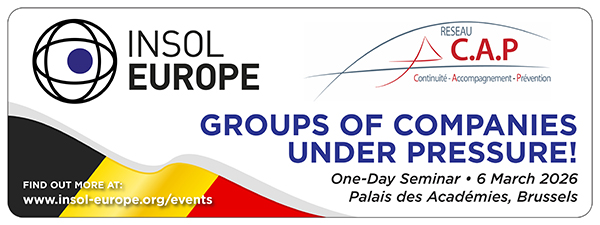
Friday 6 March 2026 - Now only 1 week to go!
Register Here • Updated Programme Now Available
Explore how groups of companies navigate cross-border challenges at this expert-led seminar, featuring EU insights and practical guidance. Conclude the day with an exclusive guided tour of Brussels’ iconic Palais de Justice, offering participants a rare behind-the-scenes insight into one of Brussels’ most emblematic judicial landmarks.
|
|
| Coming Soon! - 20th Joint International Restructuring Conference |
|
|
|
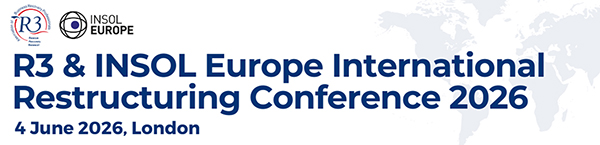
Join us for the 20th annual R3 & INSOL Europe Conference on cross-border restructuring and insolvency, returning to London on 4 June 2026. The conference will be held at the sumptuous No.11 Cavendish Square, located only a short distance from Oxford Circus.
The in-person one-day conference is aimed at all restructuring and insolvency professionals with an interest in cross-border matters. This conference is aimed not only at UK and other European lawyers and insolvency practitioners but at all professionals interested in cross-border restructuring and insolvency, including financial advisers, lenders, distressed asset investors, judges and academics.
The conference programme is designed to bring together practitioners from across the memberships and beyond to share experiences and debate topical cross-border issues. Sessions will cover the latest insights, direct from top practitioner experts in the field.
Programme to be announced soon. CPD Points: 5
Registration is via the R3 website where further information will be published soon.
|
|
| Save the Dates - Forthcoming Events for 2026 |
|
As we set our sights on the year ahead, momentum is already building. We’re shaping an exciting new programme of high-profile events designed to bring businesses, industries, and professionals together to connect, collaborate, and unlock new opportunities.
The year ahead will be rich with moments for meaningful networking, influential thought leadership, and strategic market growth. Below is a preview of the key INSOL Europe events set to spark ideas, open doors, and help define the trends shaping 2026.
|

|
- INSOL Europe & Reseau Cap Seminar, Brussels, 6 March 2026
- CNAJMJ Conference, Paris, 23 March 2026 - Register here
- R3 & INSOL Europe International Restructuring Conference, 4 June 2026
- EECC Conference, Limassol, Cyprus, 25 June 2026
- 13 October 2026, YANIL Workshop, Vilamoura, Portugal
- 13-14 October 2026, Academic Forum Conference, Vilamoura, Portugal
- 15-18 October 2026, Annual Congress, Vilamoura, Portugal
Visit our website for more events to be added as they are confirmed.
|
|
|
|
Thanks to our General Sponsors
Please contact Hannah Denney for sponsorship opportunities.
We welcome feedback, news and story ideas for future newsletters.
Please send your suggestions to Paul Newson, email: paulnewson@insol-europe.org
Follow us on LinkedIn and join the conversation!
|
| INSOL Europe, PO Box 7149, Clifton, Nottingham. NG11 6WD |
| www.insol-europe.org |
| Unsubscribe from INSOL-Europe.org mailing. |
| Disclaimer: This newsletter is sent to members of INSOL Europe. No responsibility legal or otherwise is accepted by INSOL Europe for any errors, omissions or otherwise. The opinions expressed in the articles that appear are not necessarily shared by any representative of INSOL Europe. |
|
|
.jpg)