| Latest News from INSOL Europe. View this email in your browser. |
|

November 2025
|
|
|
Dear Members
My second newsletter already and the year is flying by. Such a lot to do this year and the new Council members will shortly find themselves very busy, along with the old hands, as we move into the action phase of our new strategy.
One of INSOL Europe's critical USPs is its reputation and connection with the EU institutions as well as academia and the judiciary - we are a trusted source of information and collaboration, with our ability to rapidly put together views and technical responses from all the EU countries as well as further afield. Our strength in INSOL Europe lies in our knowledge and collaboration. This is being developed through the generations with energy emanating from younger members keen to be involved, as shown with YANIL which was very active in Vienna.
Here in the UK we are "looking forward" albeit with trepidation, to the Chancellor's budget on 26th November next week. Unusually prior to a budget, the government seems to have been flying a lot of flags up the flagpole to see which idea for tax raising causes the worst reaction in the markets and amongst the voters. Having ruled out income tax rises for working people in their manifesto, the government seems stuck with trying to redefine "working people" (currently only those earning £46,000 pa according to Westminster gossip). They are also floating a wealth tax, increased local taxes, and freezes on tax free allowances. We shall see. The government has a consultation "lite" out - on improving productivity in the UK, as well as one on reducing red tape to aid business, and there does seem to be a real desire to try to do that, although it has been tried before without notable success.
In the wider economy, macroeconomic pressures appear to be driving activity - so, persistent inflation, energy price volatility, and geopolitical uncertainty continue to fuel restructuring activity. EY’s Restructuring Pulse Survey predicts a slow-burning cycle, with rising cases across industrial sectors and southern economies facing tourism-related stress. Strategies such as amend-and-extend, refinancing, and operational turnarounds dominate, reflecting a preference for consensual solutions.
It promises to be busy for us all in the coming months and I know you are all up to the challenge.
Frances Coulson
President, INSOL Europe
|
|
|

Frances Coulson
President of
INSOL Europe
|
This issue is kindly
sponsored by:

DLA Piper is a global law
firm with lawyers located
in more than 40 countries
throughout the world.
www.dlapiper.com
|
|
| Limited number of Free Passes for PEX 2025 Available |
|

|
|
Décideurs Corporate Finance is pleased to invite members of INSOL Europe to the 24th edition of the Private Equity Exchange (PEX), taking place November 25–26 at the Pavillon d’Armenonville, Paris.
The Private Equity Exchange (PEX) is the only major annual event in the industry that brings together all Private Equity players: LPs, GPs, CEOs, entrepreneurs, experts and advisors will be present in this unique 2-days, featuring over 30 conferences about the latest topics of the industry and bringing together more than 1,200 dealmakers to exchange best practices, gain feedback, network and celebrate.
INSOL Europe will be allocated a limited number of free passes for qualifying registrants.
To enquire, please email Paul Newson.
|
|
| Council & European Parliament agree on common EU rules |
|
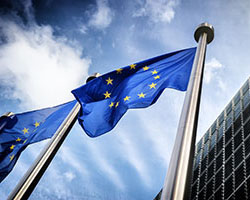
Today (21 Novemver 2025), the Danish presidency of the Council and European Parliament negotiators reached a provisional agreement on an EU directive harmonising certain aspects of insolvency law. By bringing national insolvency rules closer to each other, the EU will become more attractive for investors.
Currently cross-border investors have to take up to 27 different insolvency rules into account when assessing an investment opportunity in a country different than their own.
|
 |
|
The agreement between Council and European Parliament (EP) will establish EU-wide rules on a number of key aspects of insolvency proceedings. The goals of the new, common measures are to maximise the value which creditors can recover from the insolvent company and to increase the efficiency of the insolvency proceedings. This is an important step towards more efficient and integrated European capital markets that are crucial to the EU’s competitiveness.
Read the full press release on the Council of the EU Website here.
|
|
| Get Ready for our Annual Congress in Vilamoura, 2026 |
|

|
|
The venue for next year’s Annual Congress – the Tivoli Marina Vilamoura Algarve Resort – has now been confirmed, and we have secured a limited block of bedrooms exclusively for our attendees. Click this link to secure your accommodation now
The Tivoli Marina is located right next to the beach and Vilamoura Marina. Newly renovated rooms and suites gleam with lightness and contemporary elegance, offering sweeping views of the marina or ocean to inspire.
Registration for the Congress will be opening soon. Visit our website for the latest updates.
|
|
| Call for Expressions of Interest for Vilamoura 2026 |
|

|
|
|
INSOL Europe warmly invites all members to put themselves forward as potential speakers for our 2026 Annual Congress in Vilamoura. We welcome dynamic, insightful contributions that will enrich the programme and spark meaningful discussion. When submitting your expression of interest, please include:
- Your nationality, professional affiliation and relevant qualifications
- The topic you would like to address
- A brief statement outlining the unique insight, experience or perspective you would bring to the session
The Technical Committee is particularly keen to hear from members who have not presented at the last two Annual Congresses.
To be considered, please send your expression of interest to our Chief Technical Officer Emmanuelle Inacio at your earliest convenience.
|
|
| 6th YANIL Research Workshop - Vienna 2025 |
|
The 6th YANIL Research Workshop on Restructuring and Insolvency Law was held on 7–8 October 2025 at the Faculty of Law (Juridicum) of the University of Vienna.
Organised by the Younger Academics Network of Insolvency Law (YANIL) in collaboration with the INSOL Europe Academic Forum, the event gathered a new generation of scholars, researchers, and practitioners committed to shaping the future of insolvency and restructuring law in Europe.
The workshop opened with warm welcomes from Professor Christian Koller (University of Vienna) and Giulia Ballerini (YANIL Chair), who underlined the importance of nurturing an active academic community where young researchers can exchange ideas, test hypotheses, and build cross-border collaborations. The first panel, chaired by Jonatan Schytzer, featured a keynote by Alice van der Schee and Paul Newson (INSOL Europe) and thought-provoking presentations on tax claims in bankruptcy, pre-pack business transfers, and the harmonisation of insolvency law in the context of the Capital Markets Union.
Afternoon sessions chaired by Vasile Rotaru and Gert-Jan Boon explored some of the most pressing and innovative challenges in the field: the integration of environmental sustainability into insolvency proceedings, the treatment of data assets, and the use of algorithmic tools for early warning of financial distress. Discussions were animated and forward-looking, reflecting the intellectual curiosity and enthusiasm of the YANIL community.
Closing the workshop, Giulia Ballerini emphasised that research and academia are essential engines for improving the effectiveness and fairness of European insolvency systems. By fostering dialogue among young experts, YANIL continues to build bridges between generations of scholars and practitioners, promoting a more resilient, transparent, and sustainable European framework for dealing with financial distress.
More information about YANIL can be found on our website.
|
|
| 25 years of EIR, 10 years of the EIR Recast - Time to celebrate? |
|
25 years of EIR, 10 years of the EIR Recast – is that a reason to celebrate? In the opinion of Reinhard Bork (Professor of Law at University of Hamburg, INSOL Europe Case Register Moderator), it certainly is.
From a practical point of view, the EIR has made cross-border insolvencies considerably easier. It has contributed significantly to legal certainty, simplified procedural processes, and enabled predictable outcomes.
|
|
|
In particular, the fact that – unlike the UNCITRAL Model Law – there are rules on international jurisdiction and applicable law, even if these rules are not perfect, helps practitioners, as does the provision that foreign insolvency proceedings are recognised automatically and not in a complex recognition or relief procedure. It is also extremely helpful that we have the CJEU, a court that can ensure a uniform interpretation and application of European insolvency law.
On the other hand, there are also norms that cause more difficulties than support in practice. A particularly striking example is the rules on group coordination proceedings, which have proved to be dead law from the outset – not only in Europe, but also in Germany, where there are comparable regulations. Further, the provisions on virtual secondary proceedings live in the shadow. Finally, I am not sure whether we need six articles on data protection.
This and other hot topics will be covered in the next edition of Eurofenix, which will be published in January. If you would like to propose an article in the new or future editions, please refer to our contributor guidelines on our website, where you can also browse previous editions.
|
|
|
10 Reasons to renew your Membership in 2025
- Get DISCOUNTED RATES for our flagship Annual Congress, Academic Conference, Eastern European Conference and joint events.
- Become part of our unique and RENOWNED COMMUNITY where you will have opportunities to network with over 1300 members from 50 countries.
- Access our MEMBERSHIP DIRECTORY where you can search for fellow members by name, jurisdiction, profession and expertise.
- Get in touch with your Council member and Country Co-ordinators to MAKE CONNECTIONS within your own country.
- Automatically become a member of INSOL International and get their full member benefits.
- Enjoy a free subscription to EUROFENIX, INSOL Europe’s popular quarterly 48-page journal.
- Free access to our huge TECHNICAL RESOURCES library.
- Opportunity to PUBLISH ARTICLES in Eurofenix, our Monthly newsletter, on our website and social media.
- GET INVOLVED on projects that affect your particular industry in one of our many working groups or committees.
- INSOL Europe has a STRONG RELATIONSHIP with EU officials and representatives of inter-governmental organisations.
|
Visit our website for more details or contact Hannah Denney.
|
| INSIDE Story: Pioneering use of Part 26A Restructuring Plans for SMEs |
|
Founded in 2017, DSTBTD Limited (“Distributed”) built a digital platform matching flexible freelancers to enterprise clients such as BT. Backed by £15 million of venture capital, it expanded aggressively, growing from 29 to 66 employees between 2021 and 2023 and achieving monthly revenues over £1 million.
Despite significant investment, the company remained loss-making because of thin margins and high fixed costs. In late 2024 the shareholders sold 100% of the equity and the bank assigned its £4 million secured loan to new owners.
|

|
|
This case represents the first successful use of a Part 26A Restructuring Plan by a small-to-medium enterprise. The £6 million-turnover technology company, which supplies and manages pre-vetted freelancers for IT and software projects, demonstrated that this advanced restructuring tool — previously the preserve of large corporates – can be applied effectively to SMEs. The Plan delivered superior returns for creditors, preserved jobs, and enabled the company’s survival.
Read the full case study here by Tony Groom, Investment Partner, K2 Partners, UK.
|
|
| Update on National Insolvency Statistics from Croatia |
|
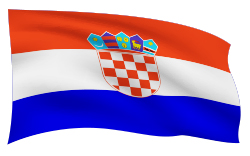
Jelenko Lehki (LEHKI LAW OFFICE and INSOL Europe Country Coordinator) has summarised recent statistics in Croatia with a look back to 2024.
The year 2024 could be described as a year of consolidation and efficiency for Croatia’s insolvency system. Following several years of fluctuation influenced by pandemic measures and a judicial strike in 2023, the courts have now achieved a higher pace in handling bankruptcy proceedings.
|
 |
|
Commercial courts opened 6,948 new insolvency cases in 2024, compared to 6,592 in 2023, representing a 5.4% increase. Even more notably, 7,586 cases were resolved, compared to 7,061 the previous year. This improvement raised the clearance rate to 109.18%, meaning that for every 100 new cases filed, more than 109 were closed. It is a clear indicator that the courts are continuing to reduce backlogs in respect to these cases.
Number of pending bankruptcy cases fell from 5,141 at the end of 2023 to 4,504 by the end of 2024 which is a 12% reduction. The average case duration improved significantly, dropping from 266 days to 217 days on average. These figures demonstrate not only the efficiency gains achieved within the judiciary give more confidence for creditors and debtors alike.
This trend unfolded alongside a relatively stable economic environment in Croatia. The country experienced moderate GDP growth, a gradual easing of inflation, and steady employment levels. All of this contributed to financial stability among businesses and households. The modest rise in insolvency filings could be considered a normal business dynamics rather than systemic distress. After years of government support and extraordinary economic measures, the data suggest that insolvency activity is once again tracking the real economy—signaling healthier turnover and more timely restructuring of non-viable enterprises rather than an increase in economic hardship.
A brief look back at 2023 helps frame these results. That year saw a temporary slowdown due to the court strike between March and July, which limited procedural progress and likely discouraged new filings. With the full resumption of regular operations in 2024, the system responded strongly, clearing accumulated backlogs and shortening timelines.
In conclusion, 2024 confirmed that Croatia’s insolvency framework has regained operational stability. With rising resolution rates, shorter case durations, and reduced pending inventories, the courts are now delivering faster, more predictable outcomes—an encouraging signal for all participants in the insolvency process.
More information on the INSOL Europe website.
|
|
| Save the Dates - Forthcoming Events for 2026 |
|
As we look ahead to 2026, we are already working on our next series of high-profile events, presenting many opportunities for businesses, industries, and professionals to connect, innovate, and grow.
The year will offer numerous occasions for networking, thought leadership, and market expansion. Here’s a preview of the key INSOL Europe events that will drive business opportunities and shape trends in 2026.
|

|
- INSOL Europe & CNAJMJ Seminar, Paris, February 2026 (tbc)
- R3 & INSOL Europe International Restructuring Conference, 4 June 2026
- EECC Conference, Cyprus (May 2026, tbc)
- 12 October 2026, YANIL Workshop, Vilamoura, Portugal
- 13-14 October 2026, Academic Forum Conference, Vilamoura, Portugal
- 15-18 October 2026, Annual Congress, Vilamoura, Portugal
Visit our website for more events to be added as they are confirmed.
|
|
|
|
Thanks to our General Sponsors
Please contact Hannah Denney for sponsorship opportunities.
We welcome feedback, news and story ideas for future newsletters.
Please send your suggestions to Paul Newson, email: paulnewson@insol-europe.org
Follow us on LinkedIn and join the conversation!
|
| INSOL Europe, PO Box 7149, Clifton, Nottingham. NG11 6WD |
| www.insol-europe.org |
| Unsubscribe from INSOL-Europe.org mailing. |
| Disclaimer: This newsletter is sent to members of INSOL Europe. No responsibility legal or otherwise is accepted by INSOL Europe for any errors, omissions or otherwise. The opinions expressed in the articles that appear are not necessarily shared by any representative of INSOL Europe. |
|
|
.jpg)