| INSOL Europe May Newsletter. View this email in your browser. |
|

May 2025
|
|
|
Dear Members
May has been a busy month so far. Last Wednesday I had the opportunity to speak at the Romanian restructuring conference, and one of the topics that I covered was the outlook for insolvencies throughout Europe. The regional differences are obvious. While the EU sees just a 1% change in the number of bankruptcies in comparison to Q1 last year, some countries like Ireland have a lot less (15%), and others have more bankruptcies. For the second half of 2025 the expectation shows again a lot of regional differences, with Germany expecting a lower number of bankruptcies and Italy expecting a 15% increase. When looking at the numbers I was struck by the 5% lower new business registrations. That might show that entrepreneurs in the EU feel caution to start new economic activity and that will have consequences later. I am not really surprised by the caution shown by entrepreneurs: the world is a wild place with tariffs being implemented and then not being implemented etc.
Meanwhile the work on the harmonization efforts of the EU is ongoing, even though it is quite behind the scenes. On the 13th of May, the European Parliament (committee of legal affairs) discussed the report of Mr Radev on the draft Directive on the harmonization of certain aspects of insolvency law. On the table was the discussion whether the directive should aim at a minimum level of harmonization to create legal certainty or that the protection of the rights of employees should be at the forefront. Radev is of the opinion that the aim should be a minimum level of harmonization and that member states should take care of the protection of employee rights. But it was clear from the discussion that not everyone is of the same opinion. During this meeting the EU Commission stated that that it wants title VI on ‘Winding up of insolvent microenterprises’ to be included in the directive and furthermore that member states should be required to implement the regime on prepacks (title IV ‘Prepack proceedings’). It remains to be seen what comes out of the negotiations. I am sure this directive will, if implemented, lead to many changes in the EU insolvency landscape as we have seen earlier with the Directive on preventive restructuring frameworks.
Now there is a lot of work done behind the scenes at INSOL Europe too. Whether it is work by the Executive on the strategy or work of the technical committees for all upcoming conferences, it is really inspiring to see the enthusiasm that all contributors bring to INSOL Europe. In this newsletter you can see the invitation for the joint conference of INSOL Europe with AIJA in Girona on June 12-14, the invitation for the INSOL Europe-R3 conference in London on July 3rd and of course for our Vienna Annual Congress, October 9-12th. The programmes of all these conferences are excellent and I hope you will take the opportunity of early booking.
Kind regards,
Alice van der Schee
President, INSOL Europe
|
|
|

Alice van der Schee
President of
INSOL Europe
|
This issue is kindly
sponsored by:

DLA Piper is a global law
firm with lawyers located
in more than 40 countries
throughout the world.
www.dlapiper.com
|
|
| Vienna 2025 Annual Congress & Academic Conference Now Live! |
|

|
|
The Academic Forum of INSOL Europe will be hosting its 21st annual conference in Vienna, Austria, on Wednesday 8 – Thursday 9 October 2025, immediately prior to INSOL Europe's main Annual Congress taking place in Vienna from 9 - 12 October 2025.
Vienna is an ideal location for the conference, particularly under the theme “When West Meets East: Bridging Europe’s Insolvency Regimes.” Vienna sits at the historical and symbolic crossroads of Western and Eastern Europe, making it a fitting venue for a dialogue. The city’s central location allows for easy access from across the continent and makes it especially convenient for participants coming from both EU and non-EU jurisdictions, including Central and Eastern Europe.
Find out more here | Register here
|
|
With thanks to our Academic Forum Sponsor:
.jpg)
|
|
|

|
|
We are pleased to announce that registration is now open
for the INSOL Europe Annual Congress in Vienna!
The Programme has been well-developed by the Congress Technical Committee
and the Keynote Speakers will be announched soon.
Find out more here | Register here
|
|
With thanks to our Congress Main Sponsor:

|
|
|
| Looking back at our EECC Conference 2025 in Bucharest, Romania |
|
|
|
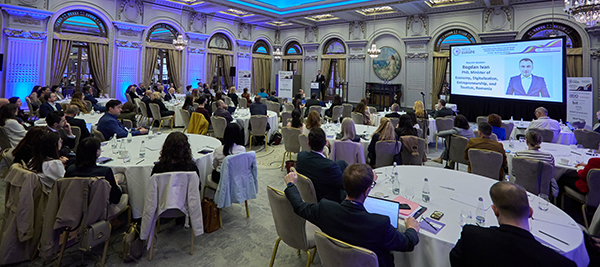
Our annual Eastern European Countries' Committee Conference on 9 May was a great success, with over 120 delegates attending from 15 different jurisdictions.
With a full day of technical sessions ahead, the President of INSOL Europe (Alice van der Schee, Van Benthem & Keulen) welcomed the delegates to the beautiful city of Bucharest and defined the red line for the beginning of the conference: the challenges for co-operative concepts such as restructuring in times of growing isolation. Our first Keynote speaker, Dr. Bogdan Ivan (Minister of Economy, Digitalization, Entrepreneurship and Tourism of Romania) gave an inspiring speech, calling for facing challenging times by staying on the European track and working together. Our second Keynote speaker, Mr. Cristian Popa (CFA, Member of the Board of the Romanian National Bank) then gave a meticulously prepared analysis of the macro-economic statistics in Romania, to demonstrate the economic effects of political decisions. He warned that prosperity is not for granted and proved, based on official statistics, that expectations to find said prosperity on the path of isolation are illusionary.
A full report of the conference can be read in the attached press release, and a further report will be published in the Summer edition of Eurofenix. Photos from the pre-conference dinner and technical sessions can be viewed on our website galleries.
The venue for 2026 is currently being discussed and will be announced in the coming months.
With thanks to our Main Sponsor

Conference Sponsors
|
|
| Investment Fraud - Who pays the victim? |
|
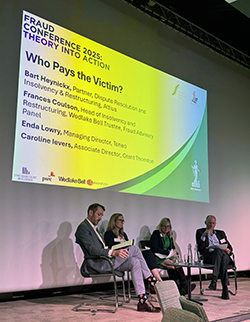
At the recent Fraud Advisory Panel’s Fraud Conference (23 April), a distinguished panel from INSOL Europe explored the pressing question of liability in investment fraud cases. The session featured Bart Heynickx (Altius, Belgium; Co-chair, INSOL Europe Anti-Fraud Forum), Frances Coulson (Wedlake Bell, UK; Deputy President, INSOL Europe), Enda Lowry (Teneo, Ireland), and Caroline Ievers (Grant Thornton, UK).
The panel began by examining prevalent fraud schemes facilitated through digital platforms, such as phishing scams and fraudulent activity on Facebook Marketplace. Frances Coulson provided an overview of the UK’s legal landscape, highlighting key provisions of the Economic Crime and Corporate Transparency Act 2023 and its potential implications for combating digital fraud.
|
 |
|
Enda Lowry and Caroline Ievers then discussed the role of insolvency proceedings as a tool to combat fraud. They outlined the investigatory powers available to liquidators in both the UK and Ireland, with a particular focus on victim compensation and the avenues available to victims of Authorised Push Payment (APP) fraud in the UK and similar compensation schemes in Ireland.
The session concluded with a discussion on public education and awareness initiatives, and the broader political and regulatory challenges. The panel concluded that the recent legislative changes were a good start in the UK to make the environment fraud-hostile, but emphasised the need for stronger political will and better resourcing to ensure that the legislation has teeth and makes a real difference.
|
|
| INSIDE Story: Universalism in the UK - What are the new limitations on the English court's ability to assist foreign office-holders? |
|
Universalism is a concept that some ideas apply universally. Applying universalism to the insolvency world fosters the ideal that insolvencies should be mutually recognised in all jurisdictions. Universalists take the view that it is better and more efficient for the administration of an insolvency and better for its creditors for there to be one single process controlled by one office-holder.
If there are assets and/or interests in more than one jurisdiction, then these should be remitted to, or controlled by, that one office-holder.
|

|
|
While that might be the most efficient way to manage multi-jurisdictional insolvencies, limitations have been imposed or have developed in some jurisdictions. Where it is impossible for there to be a single process, or there are limitations imposed by local rules, then the concept of main and secondary proceedings has evolved, with overall control exercised by the office-holder in the main proceedings. In England and Wales, a series of judicial decisions have impacted the ambit of universalism and what we have come to know as modified universalism has continued to develop. A series of leading cases have grappled with the concept and our courts have sought to clarify the extent to which it applies. Patrick Elliott (Partner, Keystone Law, UK) summarizes these leading cases in this month's Inside Story. Read the full story and others on our website here.
|
|
| Insolvency Statistics in Poland - Lessons learned from restructuring popularity |
|
In 2024 we observed two growing trends in Poland. Namely, there was a rapidly growing number of two insolvency proceedings: restructuring proceedings, mainly arrangement approval proceedings, and consumer bankruptcy proceedings, writes Paweł Kuglarz and Mateusz Kaliński, LL.M. (Tatara & Partners, Krakow/Warsaw).
With regard to consumer bankruptcy, the number of more than 20,000 consumer bankruptcies was reached in 2024 – and precisely 21,187 bankruptcies have been declared by the court. This number has been steadily growing in the first months of 2025 and this may be the trend for Poland for this year, too.
|
 |
|
It seems that Polish citizens are no longer afraid of a fresh start and they eagerly apply for consumer bankruptcy. In our opinion, this is surely good news, but one factor needs consideration. Due to this trend Polish Bankruptcy and Restructuring Courts are overloaded. The insolvency law requires that each case must be treated individually and AI so far does not help to improve the situation. As a rule, judges have in their files on top of regular non-restructuring cases, a significant number of very complex consumer bankruptcy cases, which are even more absorbing, because consumers demand speed and an instantaneous resolution of their matter, which obviously is not a viable option for an overburdened court. Although the legislator hoped to alleviate this burden by transferring part of the administrative obligations and case management duties onto insolvency practitioners in 2020, it has not been enough.
Apparently, the main reason why this reform did not work as planned was the unfortunate ‘overnight’ introduction of the KRZ system (the Central Insolvency Register; an ICT system dedicated to managing digital insolvency cases), which affected significantly the speed and effectiveness of the proceedings. Poland failed to duly prepare for the digital revolution in its insolvency courts, giving them merely a few months to implement it. Other member states took the time to run pilot schemes and prepare the court officers and judges to use the ICT systems. Currently in Poland this is the only avenue for communication with the court for the debtors. Even though the consumer may decide to file a paper petition personally with the court, still they must use the malfunctioning ICT system for any further communication or exchange with the court in the proceedings.
Please note that it was the Allerhand Institute and the Association of Insolvency Judges that applied to the Ministry of Justice to order an interim measure to alleviate the problem and allow for the possibility to conduct the proceedings in the traditional paper version. This application has so far been ignored.
With regard to arrangement approval proceedings, 4003 proceedings were opened in Poland in 2024, accounting for over 90% of all restructuring proceedings. In total, 1794 corporate insolvency petitions were submitted and 554 insolvencies were declared. Petitions dismissed account for 347 cases whereas pre-pack applications account for 73 cases, with 21 court-approved sale conditions.
Within other restructuring proceedings, 3296 arrangement approval applications were submitted and 3786 arrangements were approved, with only 318 dismissed applications.
The growing number of arrangement approval proceedings clearly demonstrate that this restructuring option is so popular for a number of reasons. To name but two, the proceedings are mainly out-of-court (the court is involved at the stage of approval of the arrangement concluded between the debtor and the creditors) and the enforcement of debts is suspended (stay of enforcement).
To date we have proposed a serious reform to change the structure of insolvency courts. Its main objective is to separate business insolvency cases from consumer bankruptcy cases and to transfer business insolvency departments from the district level (lower court) to the regional level (higher court). The consumer bankruptcy departments would remain at the district level (lower court). Please find the details of this proposal here.
Summing-up, the Polish insolvency market is growing in numbers and the arrangement approval proceedings remain the most popular, accounting for more than 90% of all cases. We hope to have the Second Chance Directive implemented soon, but in our view more reforms are needed, as outlined above.
Read further updates from Poland and other jurisdictions on our website here.
|
|
|
10 Reasons to renew your Membership in 2025
- Get DISCOUNTED RATES for our flagship Annual Congress, Academic Conference, Eastern European Conference and joint events.
- Become part of our unique and RENOWNED COMMUNITY where you will have opportunities to network with over 1300 members from 50 countries.
- Access our MEMBERSHIP DIRECTORY where you can search for fellow members by name, jurisdiction, profession and expertise.
- Get in touch with your Council member and Country Co-ordinators to MAKE CONNECTIONS within your own country.
- Automatically become a member of INSOL International and get their full member benefits.
- Enjoy a free subscription to EUROFENIX, INSOL Europe’s popular quarterly 48-page journal.
- Free access to our huge TECHNICAL RESOURCES library.
- Opportunity to PUBLISH ARTICLES in Eurofenix, our Monthly newsletter, on our website and social media.
- GET INVOLVED on projects that affect your particular industry in one of our many working groups or committees.
- INSOL Europe has a STRONG RELATIONSHIP with EU officials and representatives of inter-governmental organisations.
|
Visit our website for more details or contact Hannah Denney.
|
| New Academic Forum Technical Publication Launched |
|
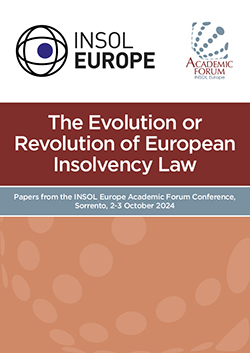
The twentieth INSOL Europe Academic Forum Conference, held in October 2024, explored the theme “The Evolution or Revolution of European Insolvency Law” with papers from the event compiled in this volume.
The book opens with Prof. Stefania Bariatti’s keynote on the historical and legal development of the European Insolvency Regulation, followed by contributions examining pre-pack procedures, cross-border insolvency comparisons, and the impact of climate change and ESG considerations on insolvency frameworks. It concludes with a critique of the European Commission’s approach to harmonising directors’ duties. The volume captures current debates and evolving perspectives on EU insolvency law.
The book is published online and is available as a free download for members. Visit our website here to download this and our previous publications.
|
 |
|
|
|
| Richard Turton Award 2025: Applications Deadline 6 June |
|

|
 The 2025 Richard Turton Award is now open for entries, with the deadline 6 June soon approaching. The competition is for anyone who is a national of a developing or emerging nation; works in or studies insolvency & restructuring law and practice and is under 35 years of age.“In addition to granting me access to the INSOL Europe community, winning The Richard Turton Award serves as a springboard to my career in global restructuring and insolvency oractice.” Emily Onyango, 2024 Winner The 2025 Richard Turton Award is now open for entries, with the deadline 6 June soon approaching. The competition is for anyone who is a national of a developing or emerging nation; works in or studies insolvency & restructuring law and practice and is under 35 years of age.“In addition to granting me access to the INSOL Europe community, winning The Richard Turton Award serves as a springboard to my career in global restructuring and insolvency oractice.” Emily Onyango, 2024 Winner
The successful applicant will be asked to write a paper of 3,000 words on a subject of insolvency or turnaround agreed with the panel. This paper will be published in summary in one or more of the four Member Associations' journals and in full on their websites. The winner will be invited to attend the INSOL Europe Annual Congress in Vienna, Austria, 9-11 October, expenses paid.
For more information and to apply, visit the Richard Turton Award page here.
|
|
| Forthcoming Joint Events on the Horizon - London & Girona |

Only 2 weeks to go - Register today!
A global economy involves many actors from the same group of companies, which can become an advantage or a disadvantage when it comes to restructuring the group.
Join us to explore group restructuring, during which we will dissect and inspect this complex topic from various angles: national and international legislation framework, financing, industry-specific issues (such as domino effects in the supply chain, etc.), current trends and court cases and many more.
The event is organized in cooperation with AIJA. It will be our third in-person joint event and we are confident that it will be as memorable as Mallorca in 2019 (1st edition) and in Seville in June 2023 (2nd edition). The seminar will take place in Girona, Spain, which will be an ideal place to discuss group restructuring during the academic program and enjoy the beauties of the city during the social program. Join us now and take part in this life-changing journey!
This conference is aimed at all restructuring and insolvency professionals with an interest in cross-border matters, not only at UK and other European lawyers and insolvency practitioners, but at all professionals interested in cross-border restructuring and insolvency, including financial advisers, lenders, distressed asset investors, judges and academics. 5 CPD points.
Find out more and Book your place now!
Visit our website for more events to be added as they are confirmed.
|
|
|
Thanks to our General Sponsors
Please contact Hannah Denney for sponsorship opportunities.
We welcome feedback, news and story ideas for future newsletters.
Please send your suggestions to Paul Newson, email: paulnewson@insol-europe.org
Follow us on LinkedIn and join the conversation!
|
| INSOL Europe, PO Box 7149, Clifton, Nottingham. NG11 6WD |
| www.insol-europe.org |
| Unsubscribe from INSOL-Europe.org mailing. |
| Disclaimer: This newsletter is sent to members of INSOL Europe. No responsibility legal or otherwise is accepted by INSOL Europe for any errors, omissions or otherwise. The opinions expressed in the articles that appear are not necessarily shared by any representative of INSOL Europe. |
|
|





.jpg)